


Why soft power is becoming the Middle East’s strongest business advantage
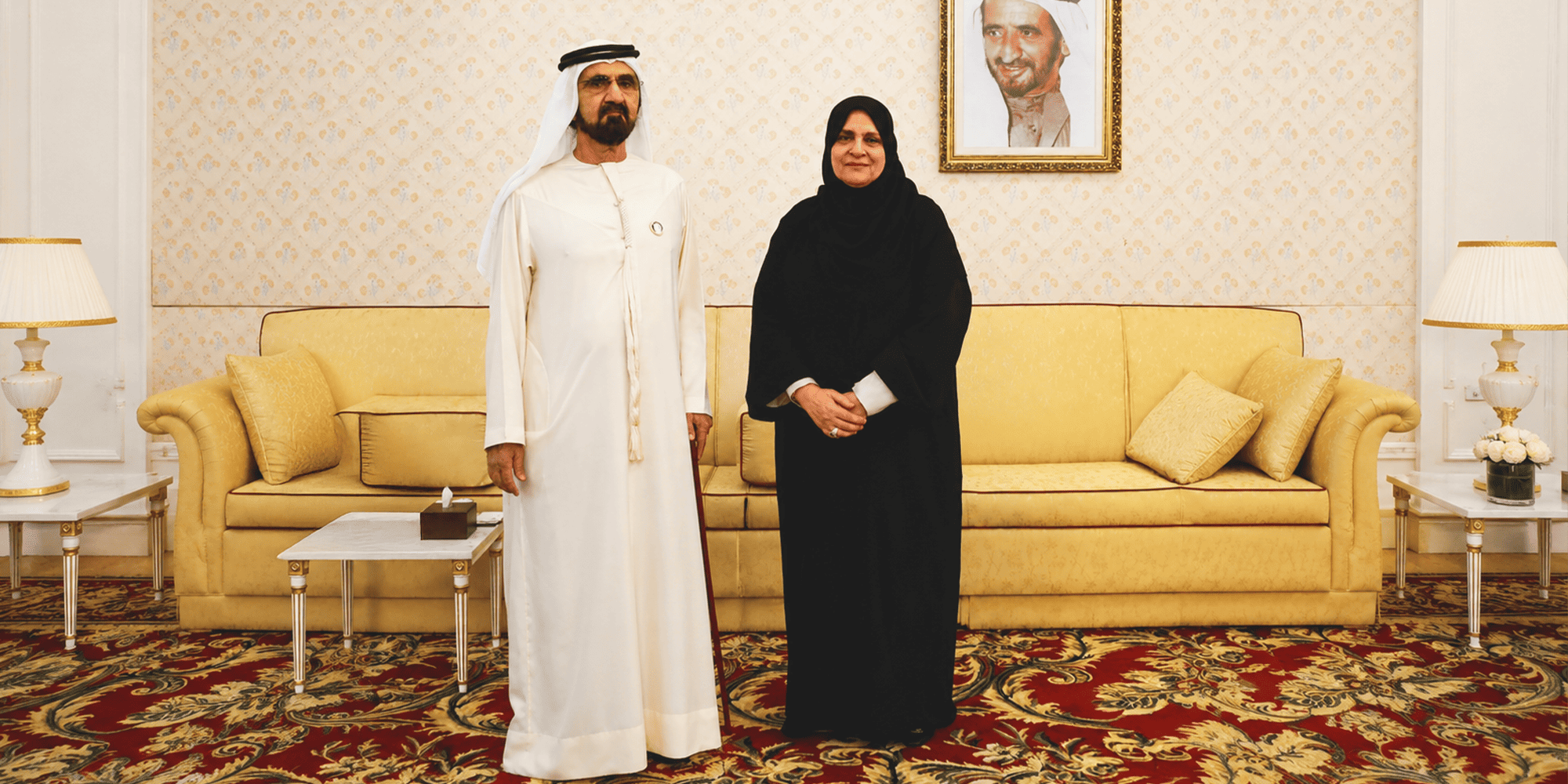
With Sheikh Mohammed bin Rashid Al Maktoum, the ruler of Dubai and the vice president and prime minister of the UAE.
Partners choosing where to invest are no longer weighing reputation against economics. They are treating reputation as economics.
I am an active board member across banking, trade, health and education, including the National Bank of Fujairah, Dubai Chamber of Commerce, Al Jalila Foundation and several institutions in the UAE. These sectors seem unrelated, but the same shift has become visible across all of them: boardroom conversations that once focused on interest rates, market access or curriculum design now increasingly turn to something harder to measure – reputation, trust and international standing.
Soft power, once treated as a diplomatic nicety, has become a measurable driver of trade, investment and business confidence. This is not specific to the UAE alone. Across the Gulf and the wider Middle East, neighbouring economies are investing in this same currency, each finding its own route to global standing.
Soft power used to be discussed mainly in terms of image, how a country is represented abroad. That framing no longer holds. The UAE sits among the top 10 countries in the world for soft power today, near the very top globally for ease of doing business and high on both future growth potential and economic stability, which shows these are not separate qualities but the same one, read in two ways. None of this happened by chance. The UAE’s move from a modest position in global soft power rankings to this standing is the result not of any single event but of the way each has reinforced the next: Expo 2020, COP28 and the World Governments Summit.
Expo 2020 alone, an event that ran for six months and drew over 24 million visits, is expected to keep contributing to the UAE’s economy for another two decades, adding tens of billions in value and sustaining well over a million job-years. That is not the arithmetic of a moment. It is the arithmetic of a decision made with the long view in mind.
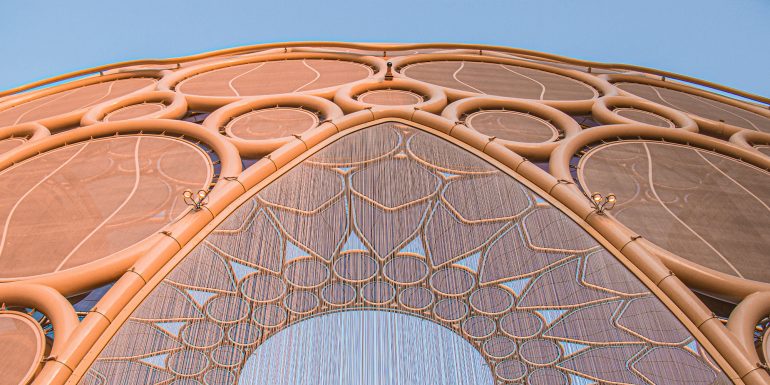
Expo 2020 hosted by the UAE in Dubai
Foreign direct investment into the region has continued to climb. This is not incidental to the UAE’s diplomatic standing. It is a direct consequence of it. Much of the UAE’s advantage today comes from where it has chosen to stand, between established Western economies and the fast-growing markets of Asia, engaging both rather than choosing between them.
Soft power is not solely the work of governments. It is built gradually through business leaders choosing to serve and the standards they bring to those institutions.
My own path across the Al Gurg Group and the institutions named earlier has been, in a small but concrete way, a contribution to a wider fabric of trust that eventually surfaces in trade figures and investment flows.
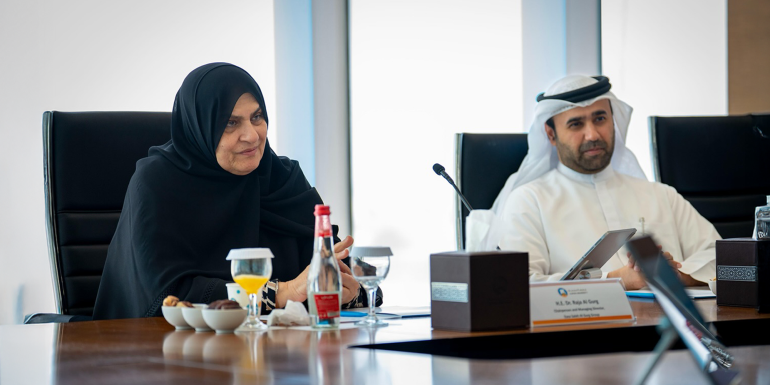
As a member of the Ajman University Board of Trustees, I chaired the first meeting for the academic year of 2025-2026 to review recent academic developments.
Capital still matters and will continue to. Yet the region’s next phase of growth will be shaped just as much by the trust it has spent decades building, quietly and without needing to announce it. Every business leader here already has a hand in that work, one institution and one relationship at a time.
MORE INSIGHTS
The global wealth migration: Why Middle East banks are best positioned to win
The UAE welcomed 9,800 millionaires in 2025, bringing approximately $63 billion in investable wealth and emerging as a primary destination in an increasingly multi-polar wealth landscape.
Is the UAE’s digital transformation market ready for what comes next?
The leaders who will drive sustainable value are those who treat digital transformation as a systems challenge rather than a technology procurement exercise.
Scaling with intention: What a USD 5 billion education boom means for the UAE
As someone who has spent decades advocating for education, especially for women and future leaders, I believe this moment is not only about expanding what we have; instead, it is about reimagining the possibilities.